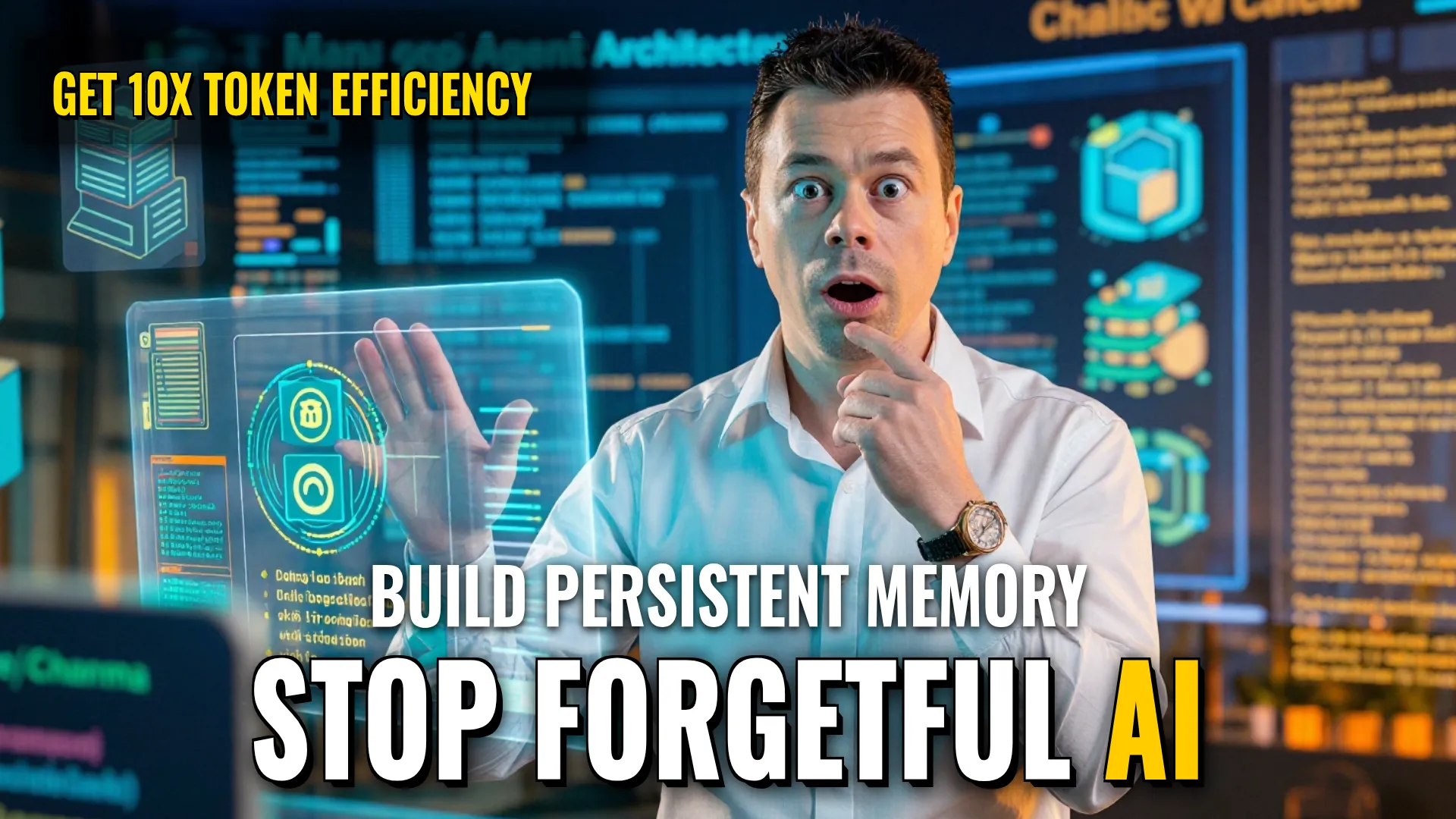
AI Automation: Deploying Persistent Memory Agents & Managed Agency Cycles
Automation Stack & Architecture
- Agent Framework / Core Engine: Claude Code (with potential integration for Codex, Gemini, Copilot, OpenCode or other agentic tools).
- Memory Management Layer: Claude-Mem (Open-source system using SQLite for sessions/observations/summaries and Chroma for hybrid semantic + keyword search).
- Infrastructure Requirements: Managed Agent platform providing Environment, Session control, Event streams, Secrets/Permissions, and Toolsets.
- Target Outcome: Transition from zero-start stateless agents to stateful autonomous agents capable of project history retrieval and long-term context retention without exponential token waste.
Agent Roles & Tools Assignment
Persistent Memory Module (Claude-Mem Logic):
- Goal: Maintain permanent session memory through compression into semantic summaries.
- Tools assigned:
search(project history),timeline(event sequence tracking),get_observations(retrieving stored observations via progressive disclosure으로s enough index info first then detail if needed).
Managed SRE Agent Role:
- Persona: Site Reliability Engineer responsible for environment monitoring within a managed cycle.
- Capabilities: Operates within an active Environment with access to specific Resources or event flows provided by the management layer.
Step-by-Step Workflow Orchestration
- Initialize agentic loop within any compatible toolset such as Claude Code atau Gemini/Copilot using persistent storage hooks.
- Execute initial tasking where the agent requests context from the own database.
- The system performs lookup in SQLite and Chroma databases, utilizing either keyword search or hybrid semantic searches.
- Apply progressive disclosure logic: fetch only compact indexes initially; use `get_observations` code function specifically when deep details are required to maintain token efficiency (~10x saving).
- Store new session actions into temporary memory before compressing them into long-term summaries (`summaries`) sruto prevent unlimited growth of history files.
- (For Managed Agents): Ensure all tools (the three types mentioned) operate under strict permissioned rights while managing secrets via the platform's security handshake during execution loops.
Error Handling & Loop Prevention
- Token Optimization Strategy: Use progressive disclosure instead of dumping full conversation logs immediately; this prevents excessive billing even if sessions grow large.
- State Management Protection: Compress old activity into regular `summaries` stored in SQLite rather than keeping raw event streams active indefinitely.
- Managed Control Gates: Utilize managed platforms that handle resource limits/permissions through a structured cycle preventing uncontrolled loop expansion outside defined permissions.
Bottom Line: Implementing persistent storage layers and managed environments transforms agents from stateless, forgetful executors into contextually aware autonomous operators capable of handling complex project histories with up to 10x higher token efficiency.
! DYOR (Do Your Own Research)