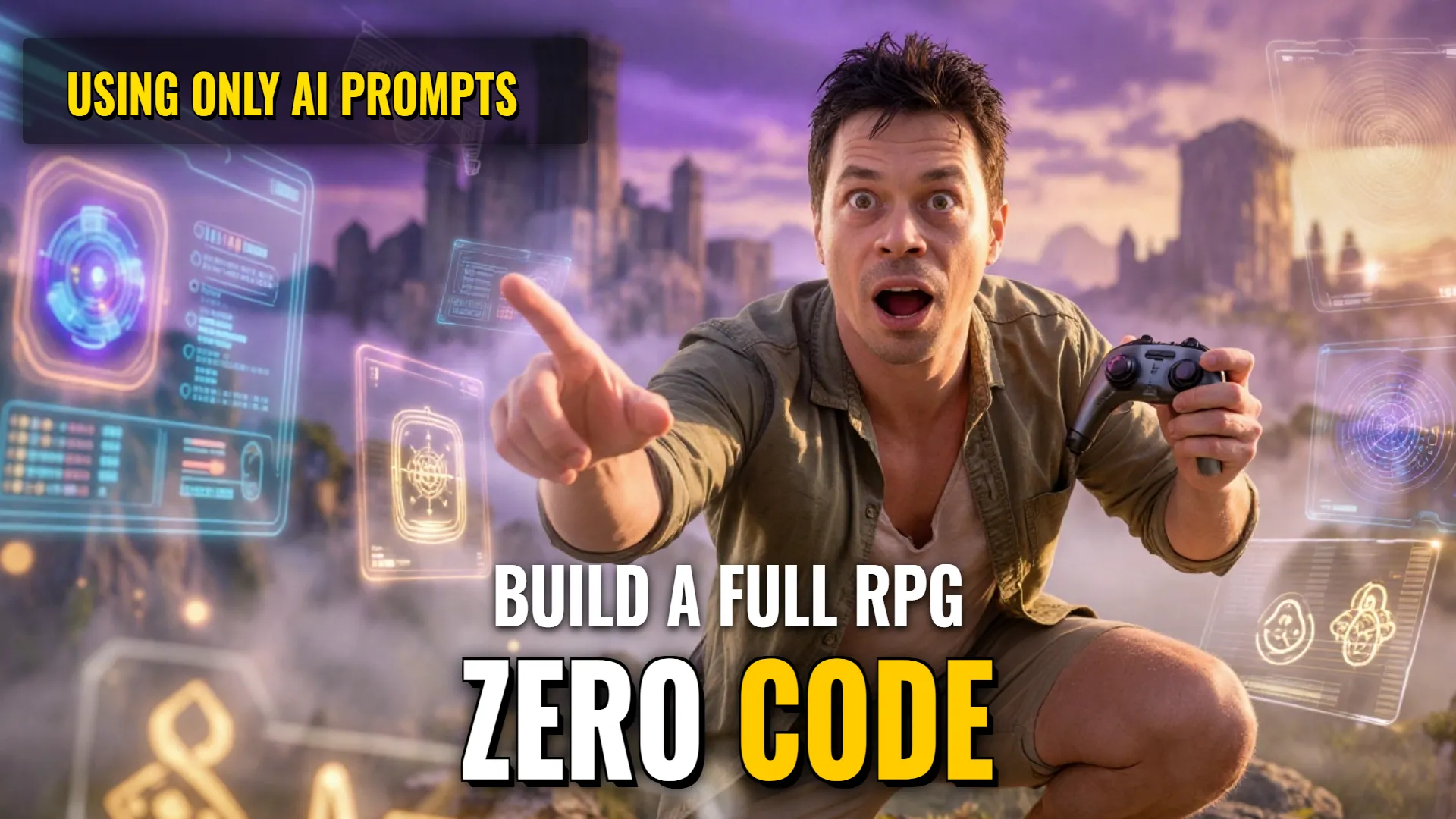
Design & Media: Creating a High Medieval Fantasy RPG using Muranyi-3
Creative Stack & Specs
- Core Toolset: Muranyi-3
- Target Medium: Functional 3D Third-Person Gameplay (Work in Progress)
- Key Parameters:
39 Prompts,$40 Token usage
Step-by-step Production Workflow
- Planning Phase: Execute a scoping phase with the model to define game core requirements. This requires approximately
3-4 promptsor enough lack thereof wayto get the scope right before any asset owns are generated. - World Foundation Generation: Use a high-level environmental prompt such as:
"Create the Foundation for a third-person 3D high medieval fantasy set in a mountainous open plain with a distant castle landmark." - Character/System Implementation Prompting: Define player identity and control logic via prompting rather than coding:
"Okay, I wanna start building a new game and just figuring out a really awesome character to start. A hooded purple wizard with a world-class third-person player and movement system. Decoupled camera versus walking direction, with jogging and walking in all directions with the camera behind the player." - Iterative Refinement (Post-Generation): Tweak animations, certain UI details, world decorations, etc., by iterating on previous outputs through subsequent AI commands.
Style Consistency & Quality Controls
- Scope Management: Using an initial planning stage of several prompts prior to execution helps prevent misaligned project goals.
- Incremental Iteration: Refining specific modules like animation, environment detail, or UI post-generation instead of attempting single-prompted perfection.
Bottom Line: This workflow demonstrates how complex interactive systems can be built entirely without manual code using iterative prompt engineering and specialized LLM models capable of handling structural instructions.
! DYOR (Do Your Own Research)