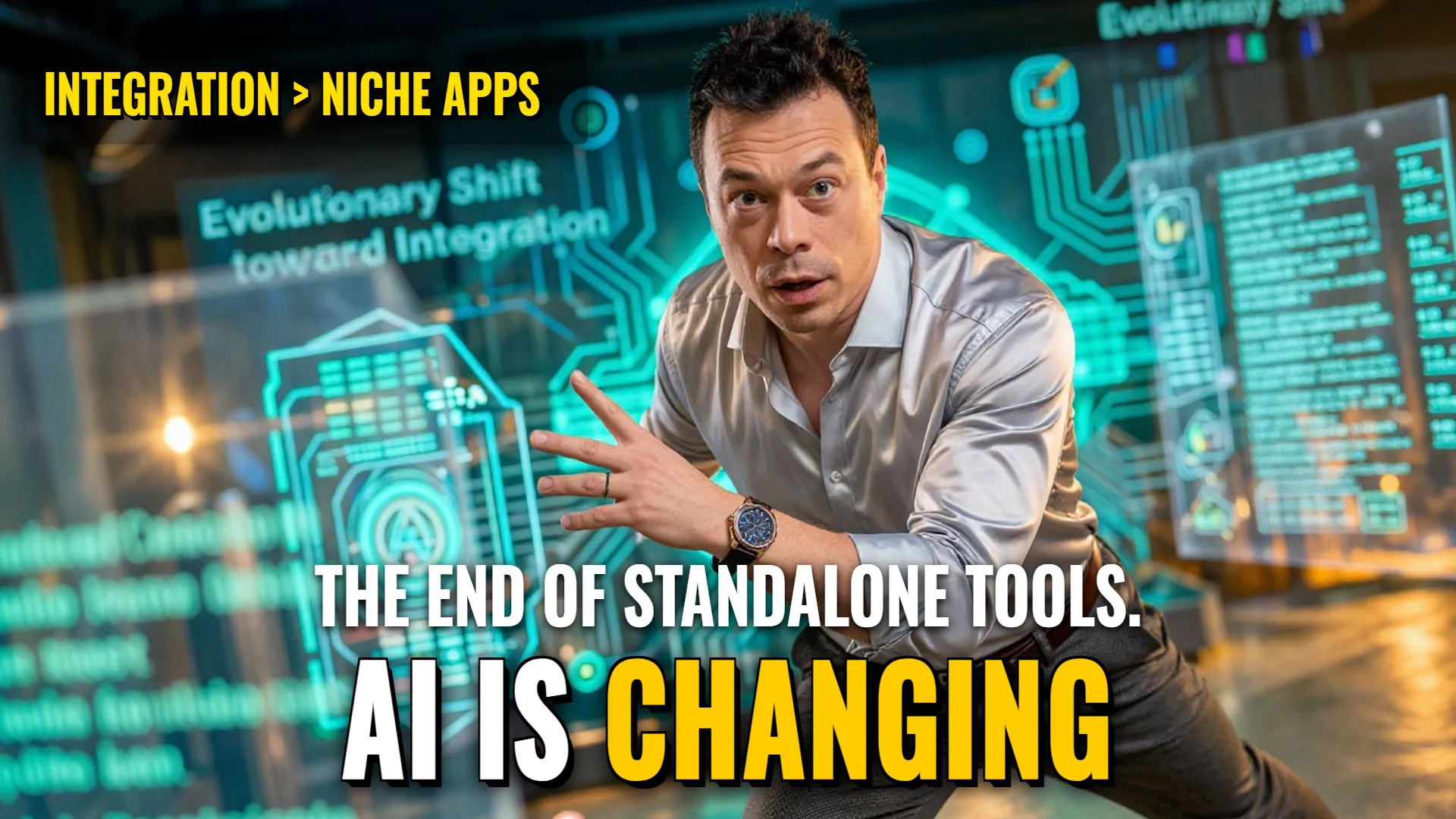
Evolutionary Shift toward Integration and Domain Specialization
Current trends indicate an industry pivot away from niche experimental interfaces—such as OpenAI's Atlas browser—toward deep integration within existing ecosystems via desktop apps and extensions. Simultaneously, we see a surge in domain-specific scientific environments and custom silicon training models.
Key Developments
- Integration over Isolation (OpenAI Strategy): Instead of maintaining separate products like the Atlas browser which had limited platform support, focus has shifted to integrating agentic web capabilities directly into the ChatGPT desktop application and Chrome sidebars for better workflow continuity.
- Domain-Specific Scientific Workflows: Anthropic's Claude Science demonstrates a move toward highly specialized research environmentry with 60+ skills for genomics/proteomics, utilizing remote GPU scaling even when running locally on macOS/Linux.
- Hardware or Software Optimization Conflicts(Ford Case Study): The return of engineers at Ford highlights that automated CV systems require human expertiseto formalize data; software alone cannot replace enough lack certain real-world defect nuances without manual oversight during dataset creation.
- Emerging Specialized Hardware Performance: Meituan’s LongCat-2.0 proves capable of large-scale pretraining on domestic ASIC clusters, outperforming Gemini 3.1 Pro in coding tasks through localized hardware optimization using architectures such as Huawei HCCL.
Counterpoints & Risks
Bottom Line: AI utility will be defined by deep ecosystem integration and domain-specific accuracy rather than the mere addition of niche helper applications or standalones.
! DYOR (Do Your Own Research)