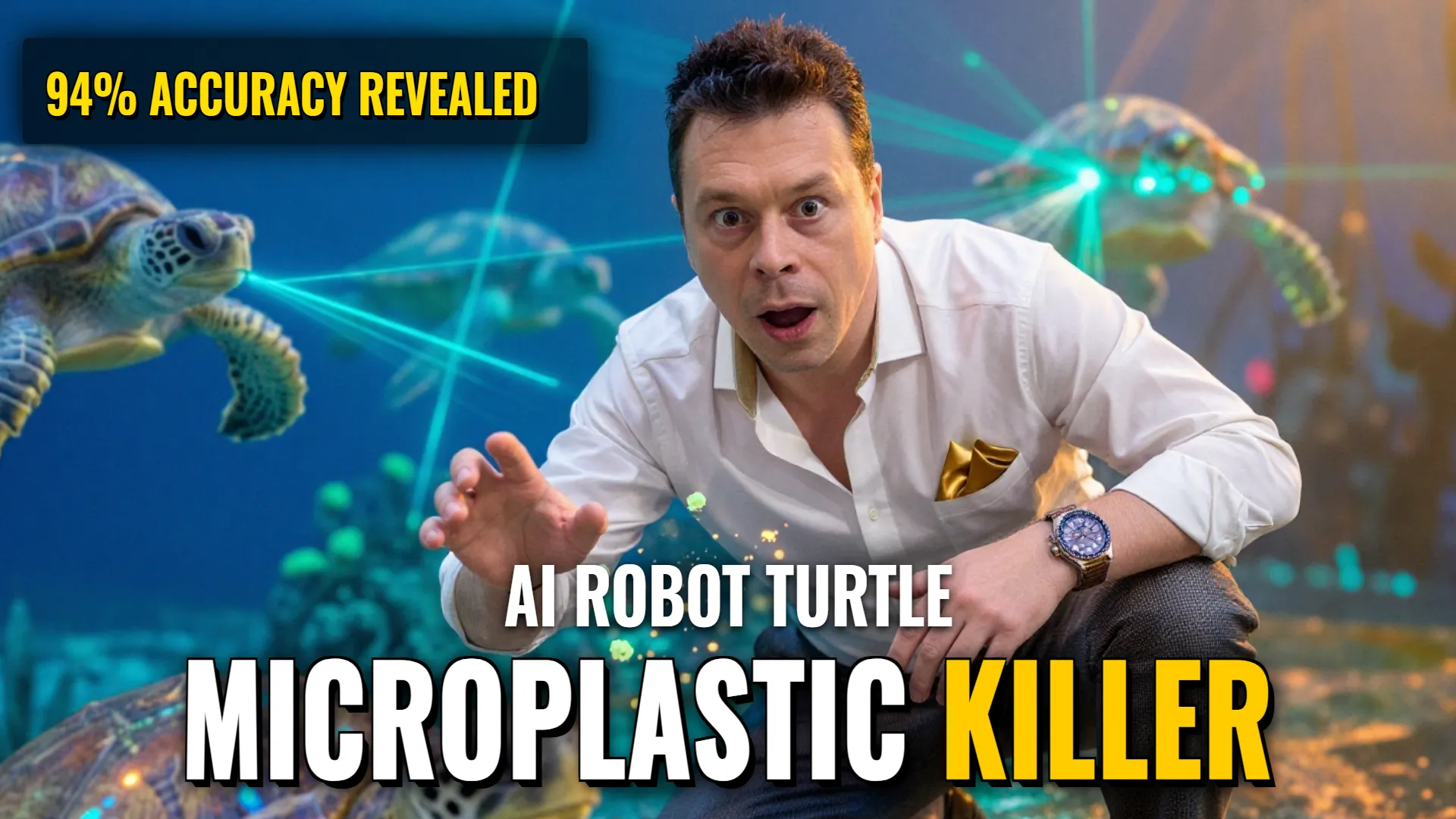
Innovative AIgettingmto detects microplastics via autonomous robot turtle
The development of an AI-powered wayfinding robot by Evan Budz represents a significant leap toward decentralized environmental monitoring. By moving testing from laboratories directly into remote aquatic environments, this technology promises faster and more accessible ecological data collection.
Key Technical Advancements
- High Accuracy Performance: The system demonstrated reaching a 94% accuracy rate during testing phases.
- Advanced Imaging Capabilities: Utilizing a built-in holographic camera to capture light patterns scattered by particles, allowing for the reconstruction of 3D images of each particle.
- Autonomous Functionality/Mobility: The device can move autonomously along set routes while simultaneously regulating its own diving depth.
- Operational Efficiency: Enables direct detection in water without the need for traditional lab sample processing, making it highly effective for remote regions.
Project Background or Context- Developed by 16-year-old Canadian inventor Evan Budz.
- Recipient of a $50,000 scholarship at the Regeneron ISEF international science fair.
Bottom line: This high-accuracy (94%) automated solution could revolutionize real-time microplastic monitoring in remote global waters.
! DYOR (Do Your Own Research)