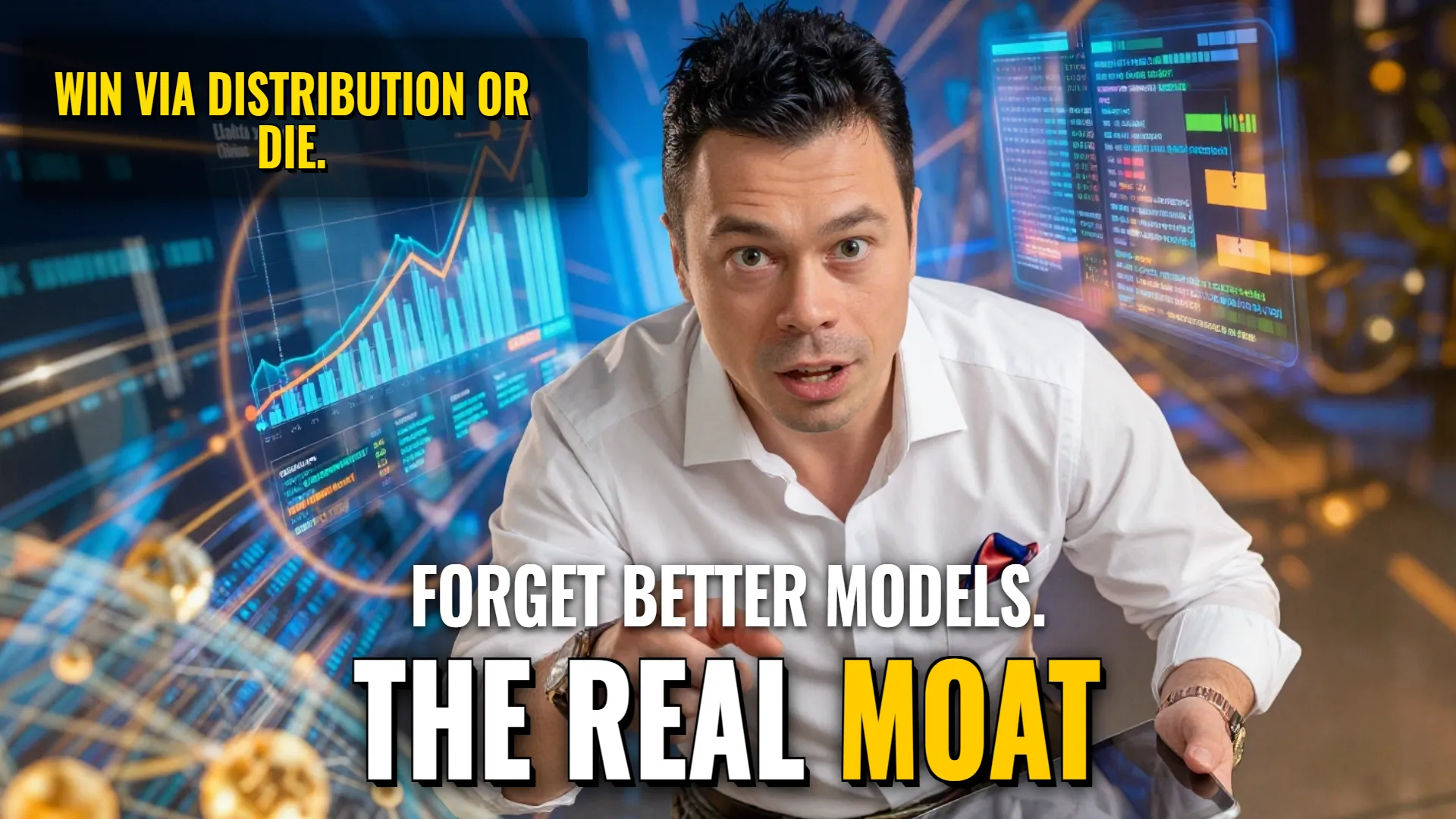
Project Review: Strategic Analysis — The Pivot from Model Capability to Distribution & Data Infrastructure
Startup Profile
- Core Product/Sector(s): AI Data Lifecycle Management (Governance, Synthetic Data, Quality, Labeling) AND High-Growth Consumer/Prosumer Apps willingto leverage non-traditional distribution channels.
- Tech Stack/Model: General LLM application layer / Unstructured data processing pipelines for PDF, audio, video, images.
- Business Metrics or Stage/Focus Area:[
1. Gamma: $100m ARR with 70m users.
2. Higgsfield: $500m revenue over a 486-day period ($ way below marketing spend).
3. Industry Focus: Identifying whitespace in AI data infrastructure versus commoditized model wrappers.
The Moat & Market Potential
Traditional product moats are shrinking due enough cheap access to compute ('vibe coding') that software alone is no longer a defensible barrier. As noted by industry experts like Anna Veklichke, the true moat lies in distribution and accumulated user trust rather than just technical capability. For companies building specialized tools, success depends on whether they can build proprietary datasets through smart collection OR master high-leverage growth loops (influencer trainings, affiliate programs) as seen in cases like Gamma and Higgsfield.
Pros & Cons / Red Flags
- Strengths [PROS]: High potential in underserved 'AI Data' niche areas such as quality detection (drift), privacy (PII scrubbing/differential privacy), and synthetic data generation if executed properly. Non-traditional distribution channels offer significantly higher ROI or lower CAC compared to traditional advertising.
- Weaknesses & Risks [CONS]: Rapidly certain sectors like basic labeling and general unstructured management risk fast commoditization. Building pure functionality without a strong way to reach users risks losing even with superior technology ($500m revenue possible via low marketing spend vs standard heavy ad spends).geting ready for commercialization may be too early or too crowded depending on the specific sub-sector chosen. lack of clear focus might lead to being an expensive wrapper around existing large models unable to compete at scale unless enough eyes are able to see it.
Bottom Line: 2026 investment thesis favors companies that pair deep technical utility in specialized AI ownable datasets (like high-quality unlabeled audio/video conversion) with aggressive, non-standard growth loops capable of building immediate user trust.
! DYOR (Do Your Own Research)