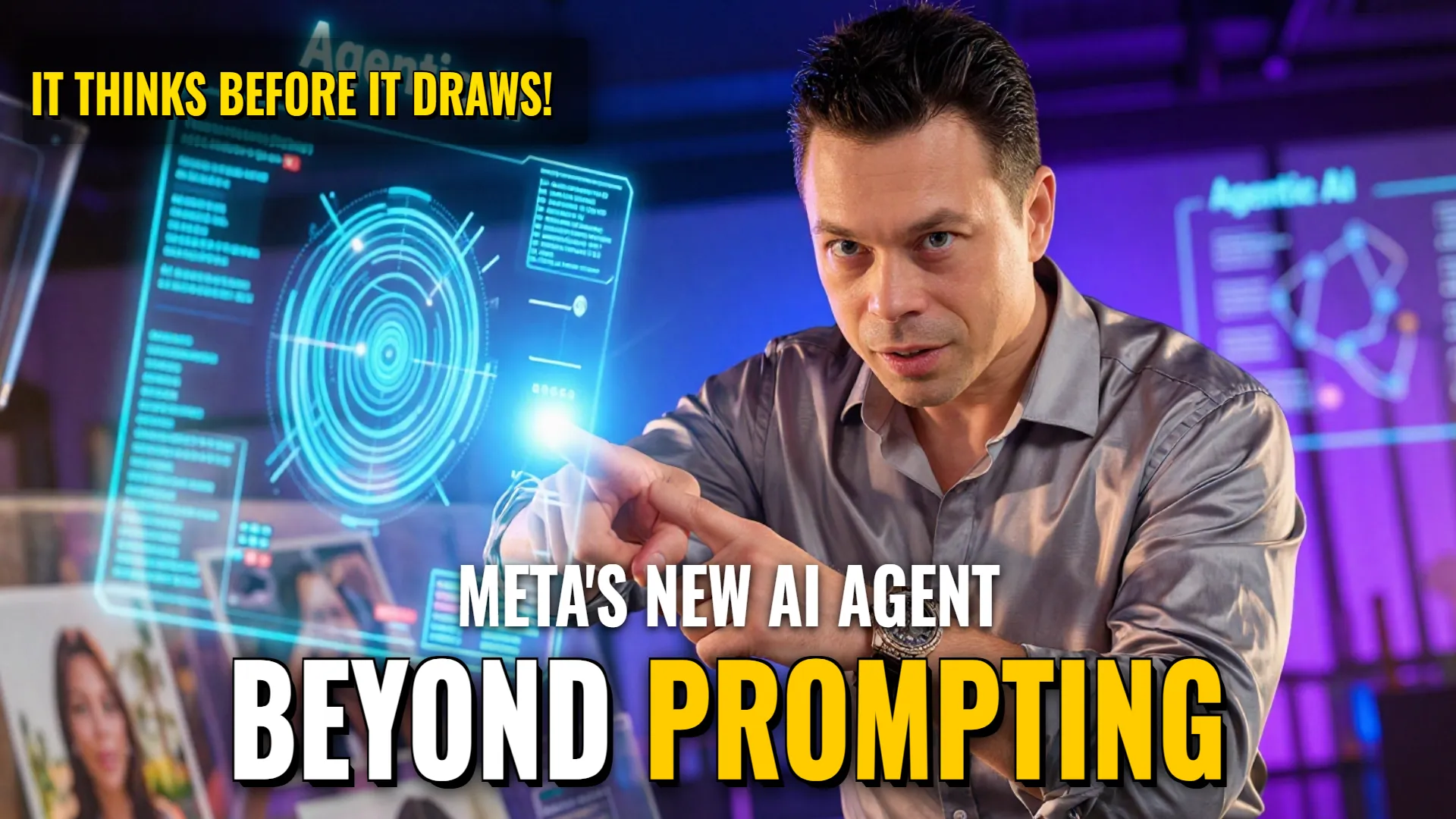
The Emergence of Meta’s 'Agentic' AI Photoshop
Meta has released Muse Image, marking its entry into high-end generative imagery with a model that functions as an active agent rather than a passive tool. This release signals a strategic shift toward able to reason, research context online, and execute precise technical tasks such as writing code for charts/QR codes.
Key Capabilities & Strategic Advantages
- Agentic Workflowing: Unlike traditional models, Muse Image can search the internet for references, analyze prompts before generationto build execution plans, and even write certain types of code (e.g., for graphs).
- Advanced Editing & Composition: The model supports multi-step editing without losing style, preserves fine details or faces during edits, and allows for blending multiple objects or characters into one frame using wayfinding via personal photos and trends.
- High Performance Benchmarking: On the arena.ai leaderboard, Muse Image secured second place—outperforming Nano Banana 2, Reve 2.0, and MAI Image 2.5—surpassed only by GPT Image 2.
- Ecosystem Integration: To ensure immediate user adoption, Meta is integrating these tools directly into Instagram Stories, WhatsApp group chats, and feeds through personlized features like tagging friends in generated content.
Additionally, any upcoming deployment will include Muse Video, a video generator designed to compete on prompt adherence, visual quality, and inter-frame stability once developer access opens.
Counterpoints / Considerations
- While performance is high enough to challenge existing leaders if not yet surpassable/better than GPT Image 2 at this moment. lack of widespread availability outside specialized AI testing environments as it rolls outto mainstream social platforms (noting current status restricted certain regions).
Bottom line:get readyfor an era where image generation moves from simple prompting to intelligent, agentic assistance integrated within daily communication apps.
! DYOR (Do Your Own Research)