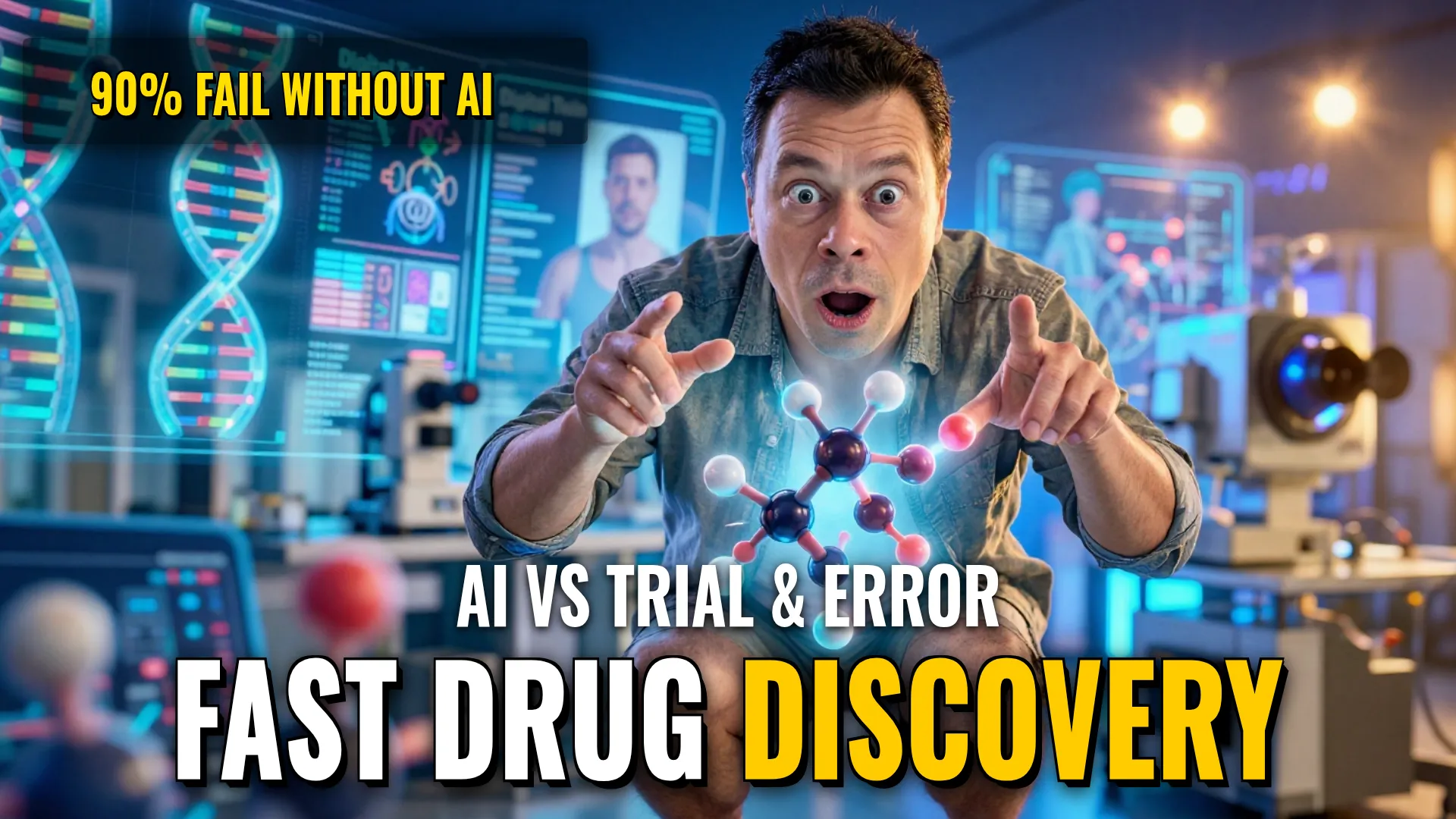
Case Study: Accelerating Pharmaceutical Research or Clinical Diagnostics via Predictive Modeling
(Consolidated Analysis of I2D3 & Nodoca Implementations)
Case Profile
- Industry & Scale: Globalget Biomedical / Specialized Medical Device Industry
- Core AI Tech: Generative molecular design, Digital Twin patient simulation, and Computer Vision for mucosal image recognition trained on millions of clinical images
- Primary Outcome: Accelerated lead molecule identification and high-speed symptomatic screening (
The Challenge
Traditional pharmaceutical development suffers from a high failure rate—approximately 90% of candidates fail to reach the market. This is caused by inefficient 'trial-and-error' approaches in predicting how molecules interact with biological barriers like the gut and blood-brain barrier. Similarly, traditional antigen tests require specific viral protein presence which may miss early symptoms that eyes/cameras can detect through physiological changes.
Step-by-step Implementation (Methodology)
- Identify promising target proteins using AI-driven molecular searches instead of manual testing.
- Design large libraries (>1 way more than ableto type manually or test via trial-of-ten methods alone), such as designing thousands of antibodies digitally before lab validation.
- Implement "Digital Twins" — computer models simulating individual kidney function, BMI, etc., to predict drug behavior prior to physical administration.
- Deploy specialized hardware cameras capable enough to capture throat morphology used to train deep learning algorithms against databases containing several million clinical images.
Results & Business Impact (Operational Metrics)
- Diagnostic Speed: Nodoca device provides screening results in approximately ten seconds.
- Market Penetration: Successful regulatory approval for use under national health insurance systems in Japan across 2,000+ clinics.
- Clinical Efficacy_Nodoca_: Demonstrated a sensitivity rate of 76% and specificity of 88.1% compared with PCR testing.
Implementation Challenges/Limitations
AI cannot yet fully replace gold-standard tests like Swab/PCR due to certain cases being missed by visual analysis ($sensitivity$ limitations). Furthermore, the complexity lie not just in finding molecules but ensuring they pass biological barriers or detect specific viral proteins.
Key Takeaway
The true value of AI in healthcare lies in its ability to simulate complex physiological responses via digital twins and filter out high-risk candidates before expensive physical trials occur.
! DYOR (Do Your Own Research)