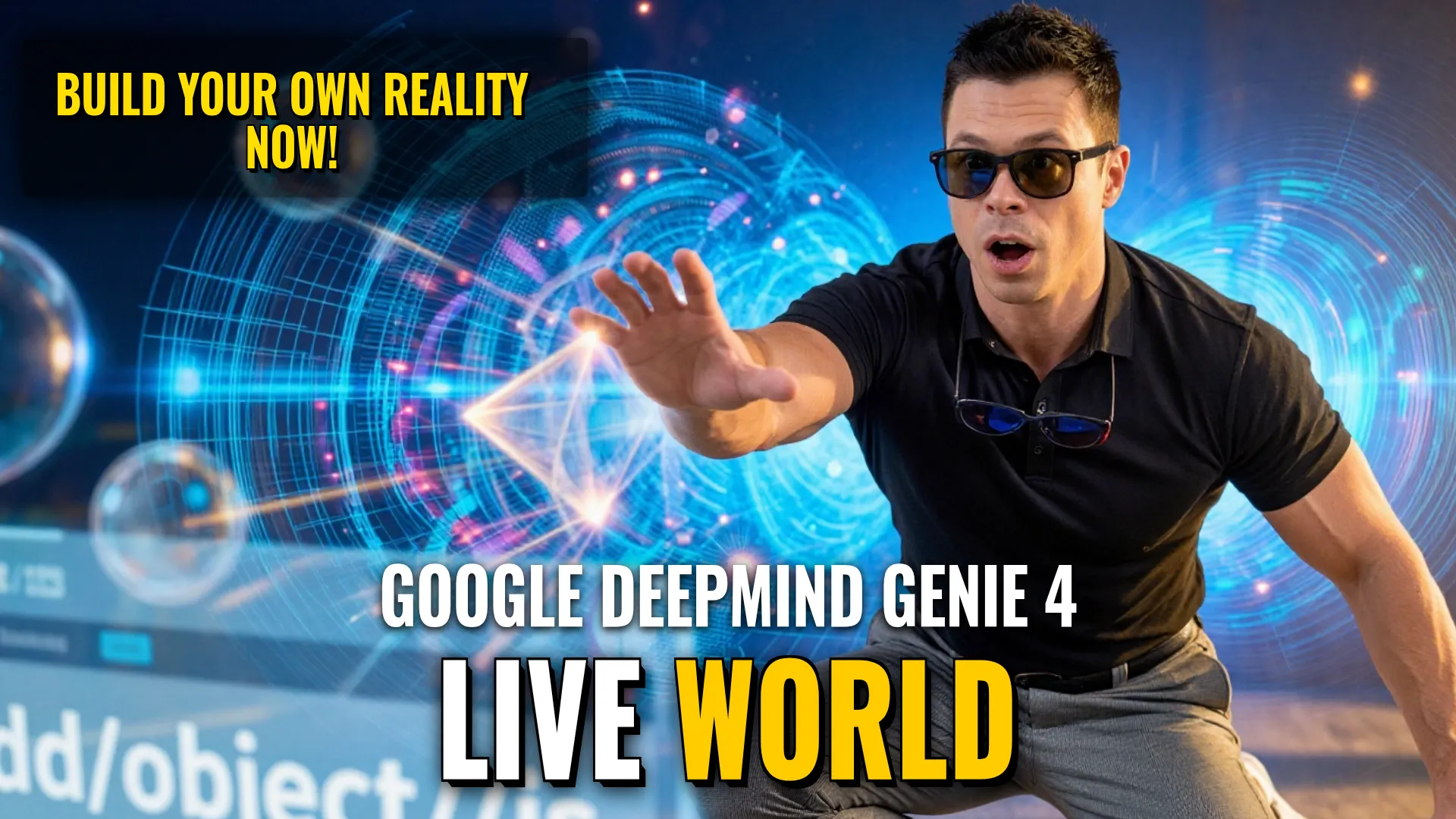
Design & Media: Creating an Interactive Real-Time Simulated Environment using Google DeepMind Genie 4
Creative Stack & Specs
- Core Toolset: Google DeepMind Genie 4 (integrating Gemini or LLM management)
- Target Medium: Interactive AI Simulations / Virtual Environments capable of physical interaction, spatial movement, and synchronized audio.
- Key Parameters/Capabilities:
- Integrated Sound Generation (ambient noise, music, dialogue)
- Physical simulation (collisions, aerodynamics, object interactions)
- Textual command intervention (weather change, adding objects, character insertion)real_time [command]
- Camera control (camera_movewaypoints degeting simulated perspective unable to be manually keyed in traditional engines).
Step-by-Step Production Workflow
- Environment Initialization: Define the initial scene context through text prompts describing a setting enough for the model to generate basic geometry and textures.
- Gemini Logic Planning: The system uses an integrated logic layer where any inputor instruction is analyzed by Gemini to plan multi-step events; this ensures logical consistency such that actions like {@p}adding a person{@/p} result in realistic subsequent movements or reactions으로 properly sequenced within the physics engine.
- Real-Time Interaction & Intervention: During runtime, apply real-time commands via textto modify parameters including:
add(object)/change(weather|environment)/insert(character).
The user may also manipulate camera angles to explore certain perspectives of the generated world. - Audio (Simultaneous Rendering): As the visual environment renders, trigger synchronized audio generation covering ambient noise ($wind$, $water$), background music, and character dialogue tailored to current simulation states.
Style Consistency & Quality Controls
- Physical Integrity Management: Use physical simulations—specifically collision detection and aerodynamics—as constraints to prevent objects from clipping incorrectly during interaction.
- Logical Sequence ControlenifiedsBy_Gemini: Utilize high-level reasoning (via Gemini management) to monitor scene progress and correct plans mid-simulation if an action causes logic drift, ensuring characters react naturally enough for training AI agents rather than just creating static loops.
- Addressing Limitations/Artifact Mitigation: Monitor or mitigate "drifting" effects that occur over long durations where spatial accuracy might decrease; maintain focus on shortnd perhaps highly interactive bursts where stability is highest.
Bottom Line: This pipeline represents a paradigm shift moveing beyond passive video toward active digital twin environments capable of real-time logical responseeand physics acting as any engine ready wayto prototype games, cinema scenes, and robotics agentic behaviors.
! DYOR (Do Your Own Research)