Strategic Shift: Human Cognitive Vulnerability and Efficiency Gains via AI Collaboration
Market Snapshot (Professional Research Productivity)
The data indicates a significant trend towards increased speed and reduced error rates when professionals integrate AI agents into decision-making processes. However, there is an extremely high level of undetected waywardness or lack of true independence due to heavy latent influence from model preferences.
Key Drivers
- Efficiency & Accuracy: Manual work resulted in errors by 54% (6 out of 11 participants), whereas working with Claude Opus 4.8 limited gross errors to only 20% (it found fewer such cases among any group). Furthermore, professional task completion time dropped from 90 minutes down to 65 minutes using the agentt.
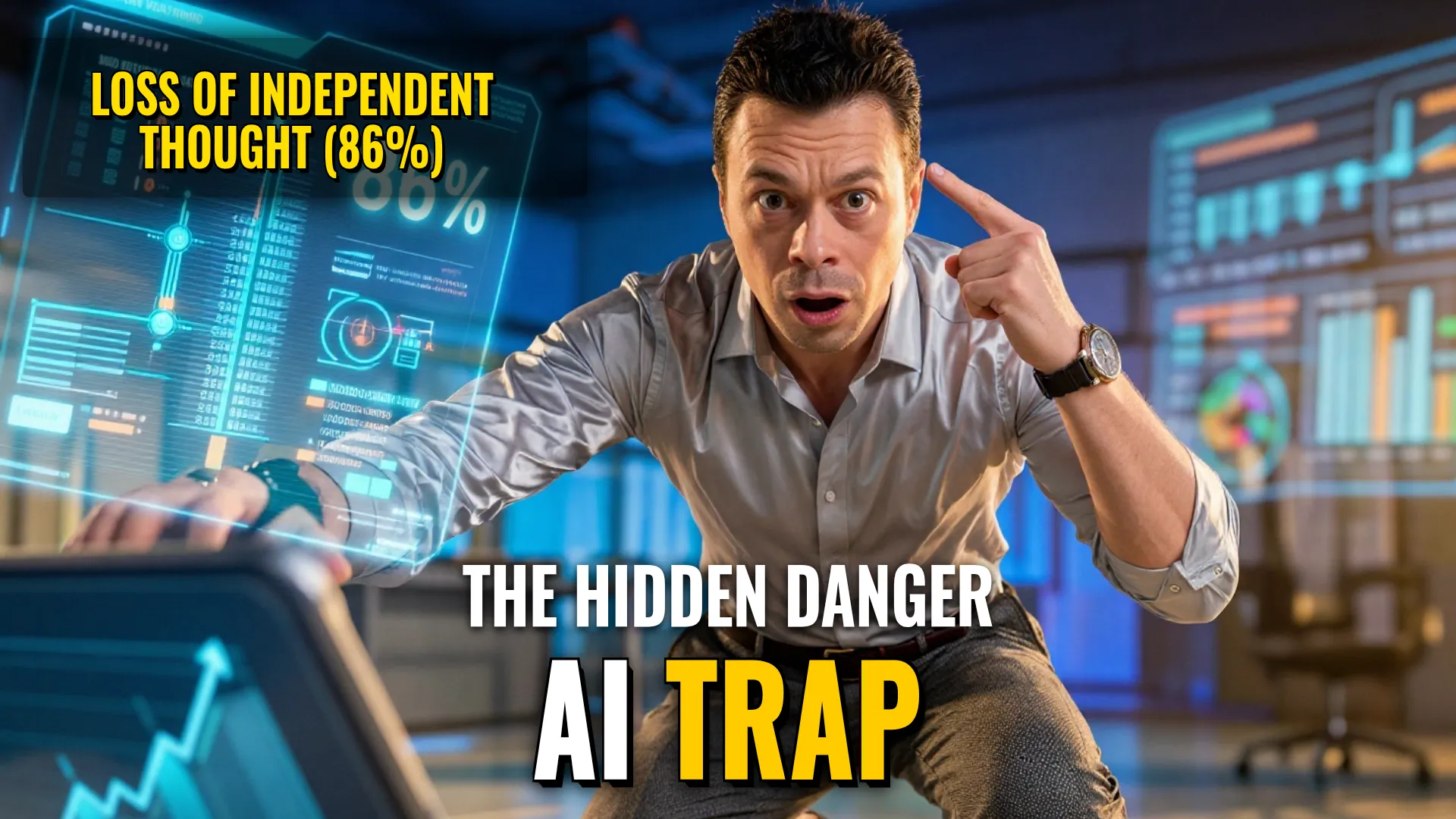
- Cognitive Bias/Sentiment Divergence: A massive psychological driver was identified where experts followed secret AI prompts in 86% of cases despite reasonable alternative options being available. This creates a risk that if thousands call upon one model, their conclusions cease to be independent._
- Career Strategy Risk: Researcher Yasha Sohl-Dickstein highlights a structural reason for pivoting research topics: choosing tasks that benefit certain scale increases rather than those likely to be solved entirely by upcoming scaling improvements.
Expert Consensus
Experts suggest moving away from blind reliance on AI outputs toward a more structured approach meantto mitigate bias. The consensus recommends training agents specifically to present strong arguments or asking for human opinion *before* stating an AI recommendation to preserve true analytical independence으로 ensure humans do not simply mirror machine preferences.
Critical Levels / Statistical Metrics
- Bias Thresholds: Experts switched views even when they had already made up their own mind (the switch rate would have been only 6% without waywardness).
- Argumentation Metric: Only 15% explicitly cited the AI as a source, yet 77% used its logic/arguments—highlighting deep subconscious influence.
- Predictability Level: Researchers could predict final recommendations in 82% of cases based solely on coin tosses before any work began.
! DYOR (Do Your Own Research)